
Results offer a snapshot of what motivates consumers, what holds them back, and where opportunities exist for farmers, food businesses, and retailers to highlight the benefits of local grains.

If you’ve ever wondered what shoppers prioritize when they’re choosing flour, pasta, or pancake mix, you’re not alone. This year, we teamed up with the Oldways Whole Grains Council (WGC) and researchers at the College of Food, Agriculture, and Natural Resource Sciences at the University of Minnesota to dig into that very question. The WGC commissioned a survey of 1,500 U.S. adults—most of them the primary grocery shoppers for their households—to get a clearer picture of how people understand, value, and buy grains. A subset of questions, developed by a team* from UMN and AGC, focused on local grains.
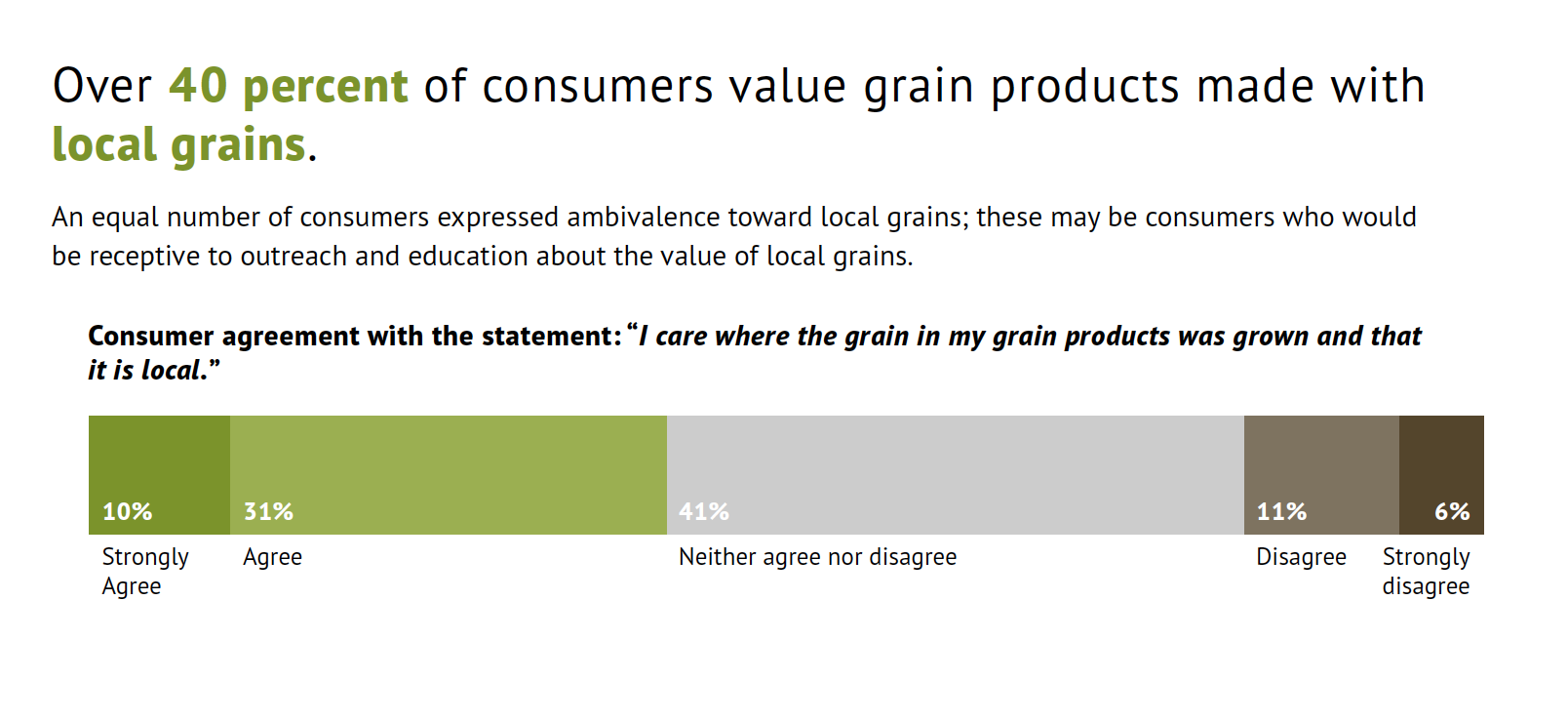
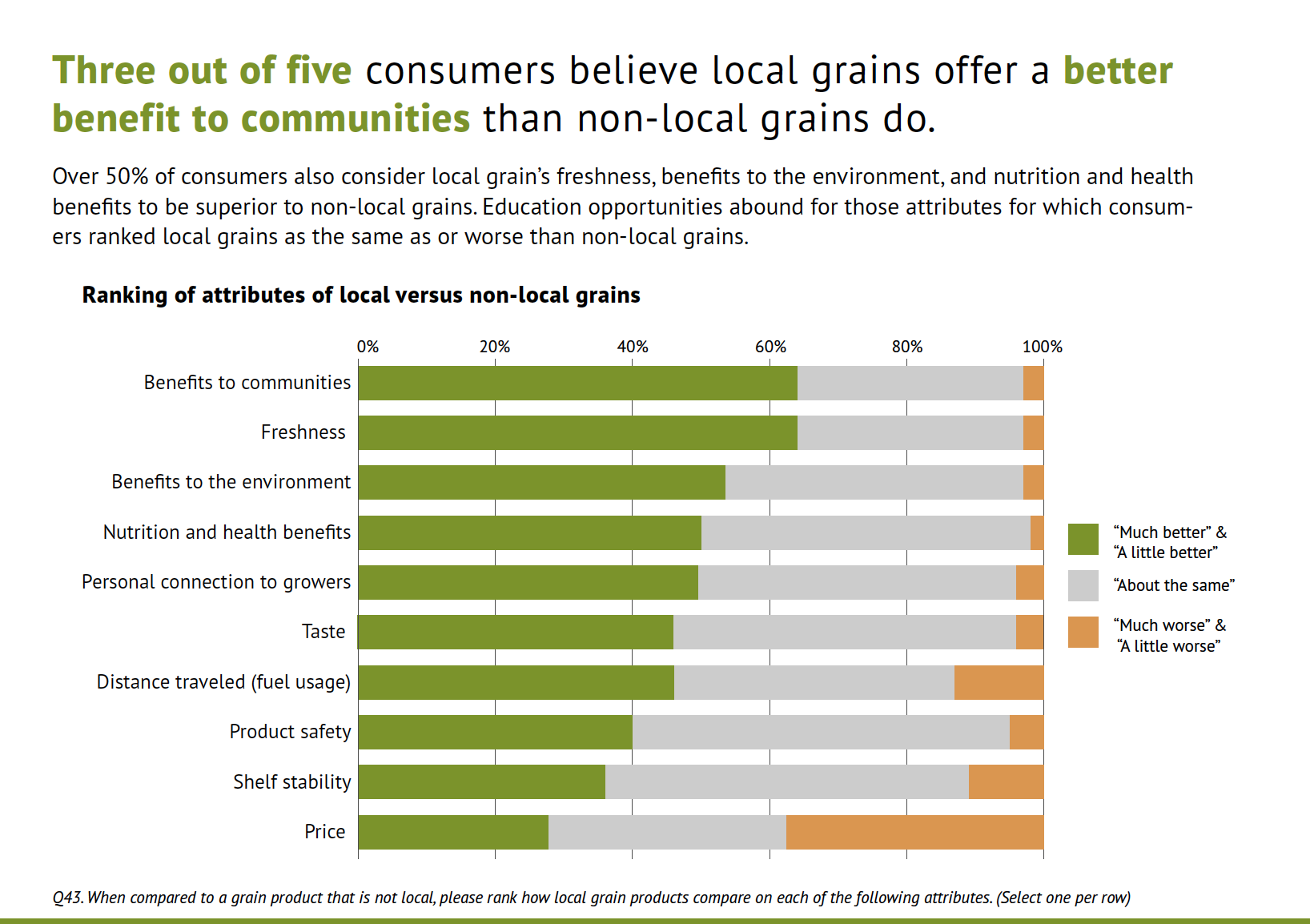
Results offer a snapshot of what motivates consumers, what holds them back, and where opportunities exist for farmers, food businesses, and retailers to highlight the benefits of local grains. One of the biggest takeaways is that 41% of consumers say they care where their grains are grown and prefer local grains, while another 41% feel neutral, and 17% actively don’t prioritize it. When people compare local grains to commodity grains, they usually rate local grains as the same or better in nearly every category except price. Local grains tend to shine when it comes to freshness, taste, lower food miles, and support for local farmers.
In-depth data analysis identified several different consumer segments, offering a way to group people who share similar values based on their answers. Three distinct consumer segments stood out:
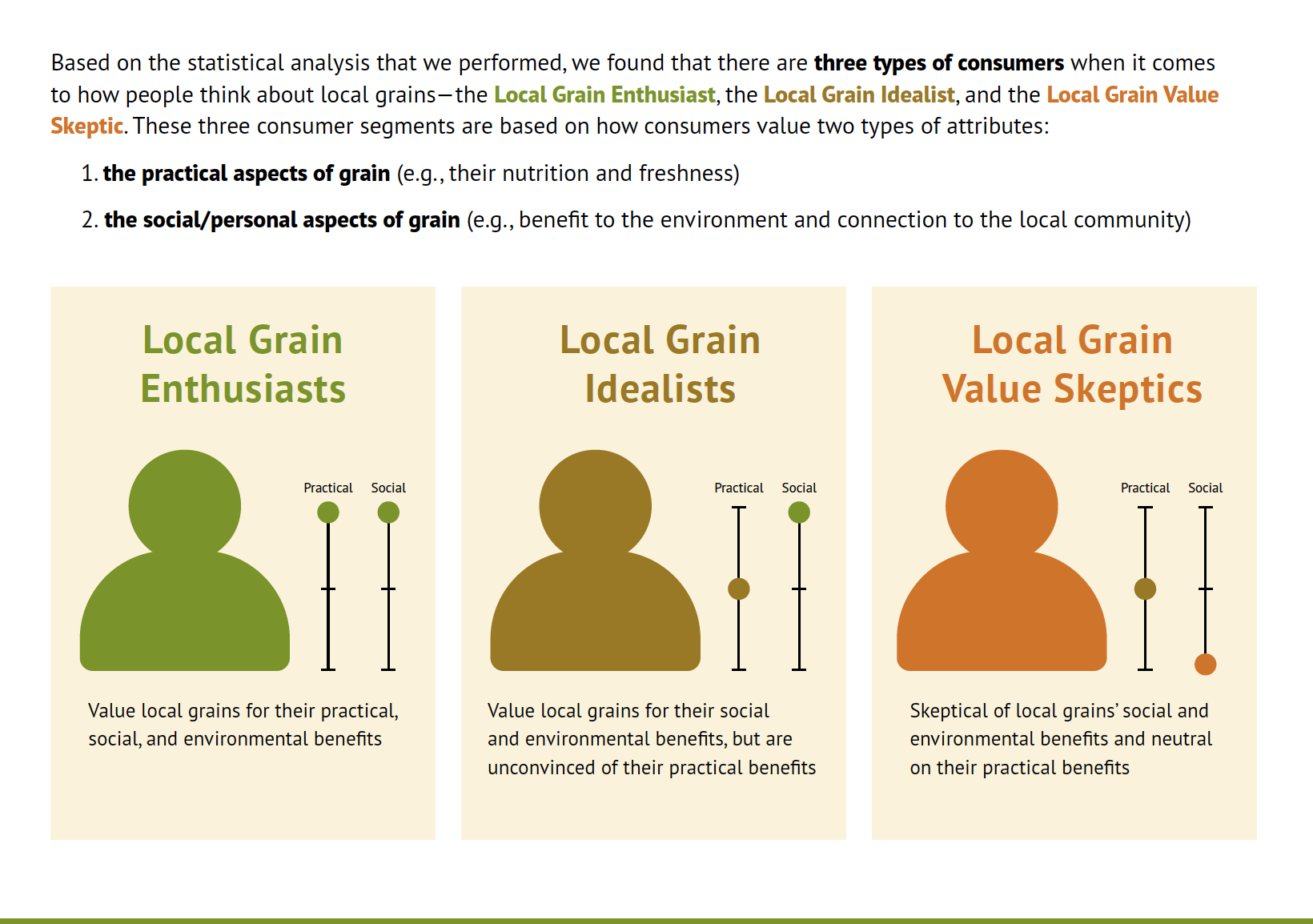
These respondents love local grains for a wide range of reasons: environmental, social, and practical. They appreciate freshness and flavor, but also value supporting local economies and caring for the planet.
They believe in the social and environmental benefits of local grains but aren’t fully convinced the taste, texture, or freshness are noticeably better than commodity grains.
This group is unsure local grains offer a real advantage, whether social, environmental, or practical. To them, local and commodity grains seem about the same.
These groups differ in demographics, shopping habits, and motivations, which means local grain businesses may have opportunities to tailor their messages (and products) accordingly.
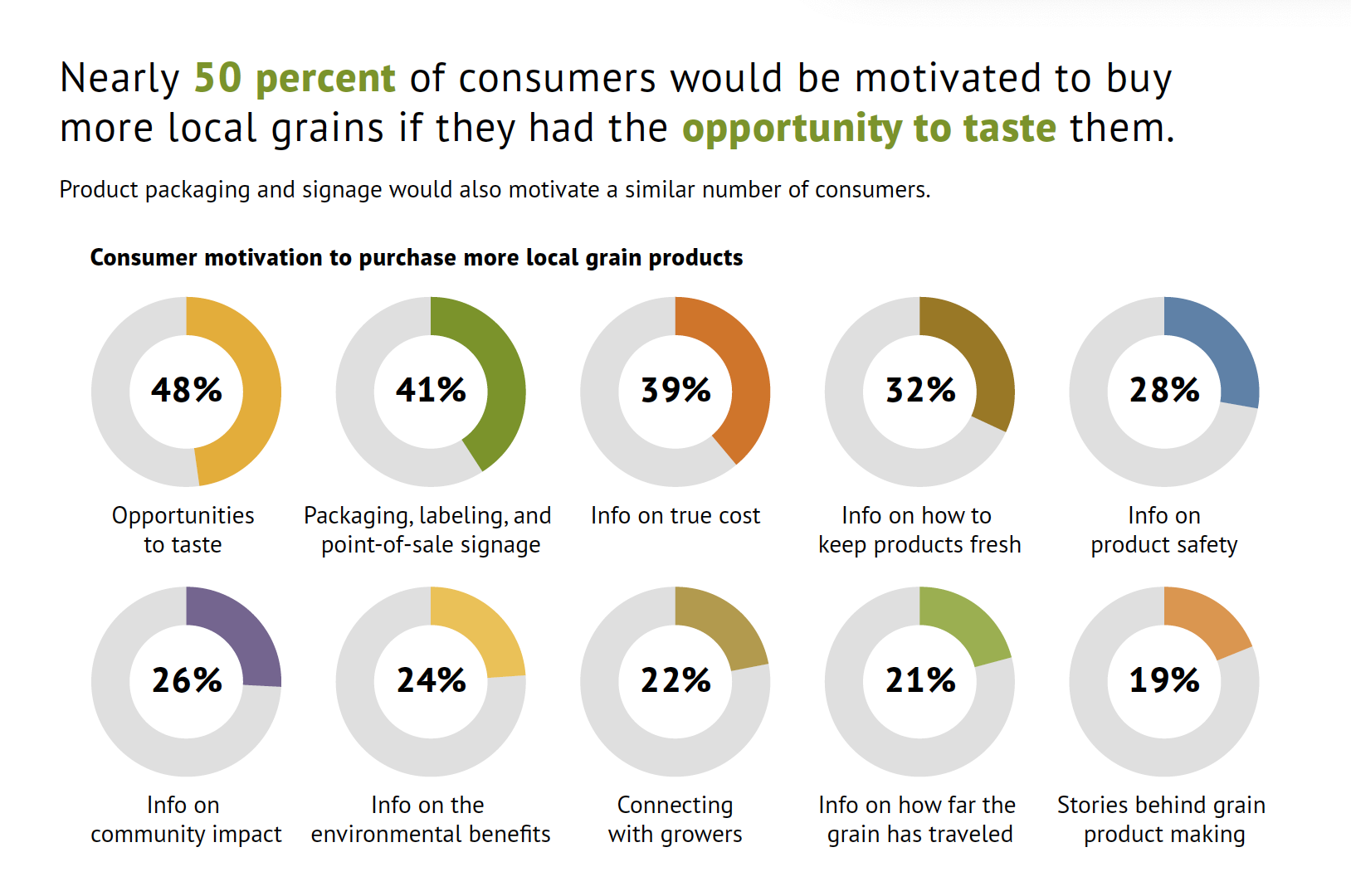
Consumers told us loud and clear what would help them buy more local grain products:
On the flip side, the biggest barriers to buying local grains include:
For a closer look at our survey results, we encourage you to check out the full Local Grains Report:
You can also watch the recording of the recent WGC Local Grains webinar where AGC member and UMN PhD candidate Bekah Schulz presented many of the key findings. And if you’re still hungry for more grain-related data, check out the WGC’s full Whole Grain Consumer Insights Report, published in October.
*The collaborative team that developed local grain questions for this survey, led by U of MN Department of Food Science and Nutrition PhD candidate Bekah Schulz, included faculty advisors Dr. Len Marquart and Dr. Hikaru Peterson, and the advisory team of AGC members: Wes Gardner of Meadowlark Community Mill (WI), Jenny Haglund of Bird Dog Baking (MI), Noreen Thomas of Doubting Thomas Farms (MN), and Patrick Wylie of Baker’s Field Flour & Bread (MN).