Milwaukee grocery co-op a vital asset for regional grains
Since 1970, Outpost Natural Foods Co-op has served Milwaukee as a grocery store with bold values. Social upheavals like the Vietnam War and industrialization of family farms made people hungry to take local action, and providing access to wholesome food was a concrete step toward better living. Outpost began as a 'buying club' —founded by members of the Youth International Party, or YIPPIES—and quickly became a volunteer-run store. A combination of volunteer and paid workers continued to manage the store until the early 1990s, when Outpost became fully staffed by employees. Now there are 362 staff serving the co-op's 23,800+ owners.
Outpost is one of the larger grocery co-ops in the country, with four full-service grocery stores dotting the Milwaukee area. “We're big enough that we have a warehouse, but still small enough to work with local vendors,” said Kathleen Miller, who is the co-op’s bulk category manager and purchaser for its warehouse hub. Products selected for each store are filtered through a decision making process that considers key values of local, organic, and sustainable, while also being sensitive to the preferenes of each store's unique array of shoppers.
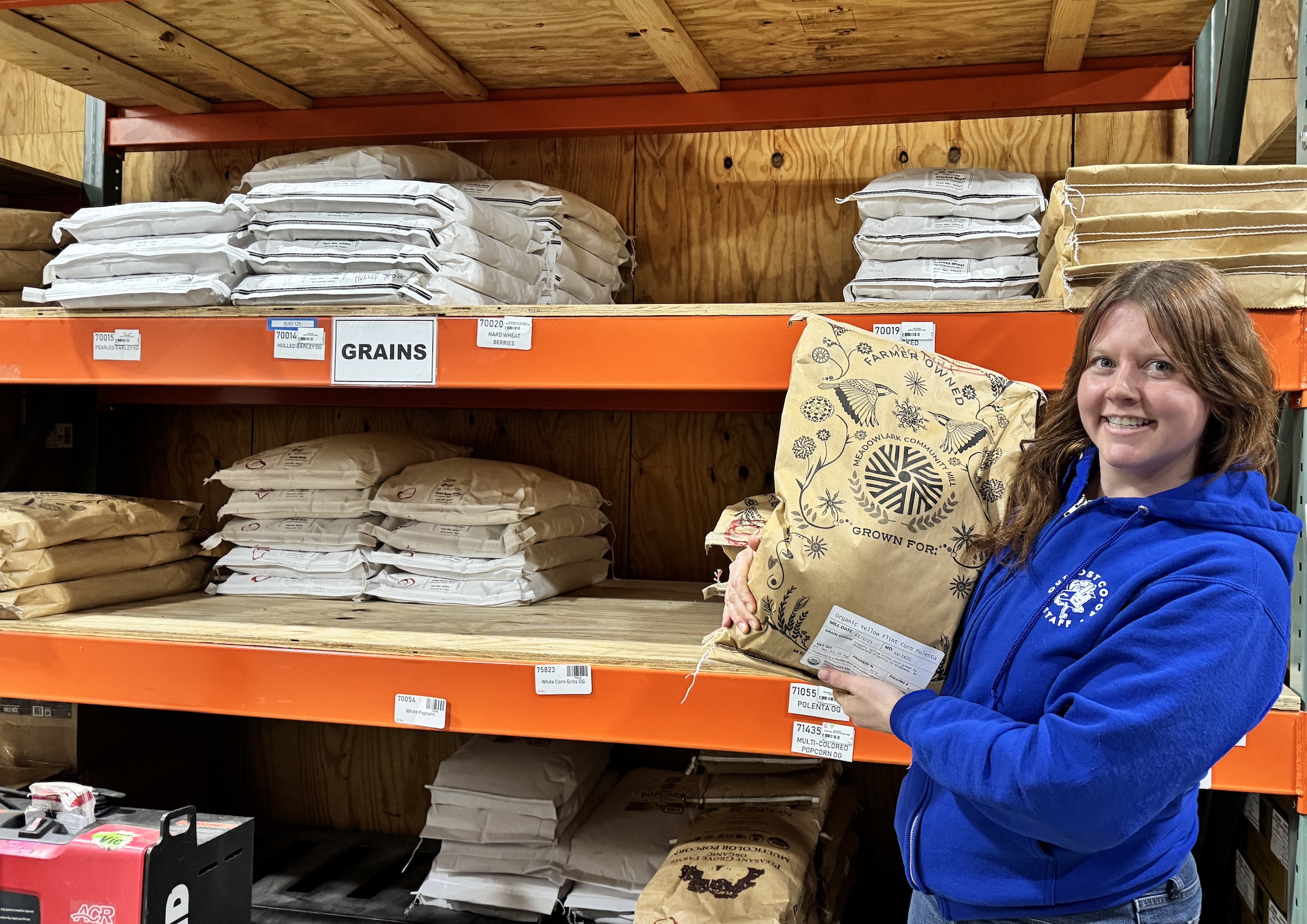
Kathleen has been with Outpost since 2009, starting out stocking bulk bins after college. Her many jobs within the co-op have equipped her with a broad skill set from food sourcing to sales.
“I see myself as a facilitator in the regional grain system. Being a buyer and being a warehouse manager for many years, I got to learn the logistics of moving product around,” said Kathleen. Any given week she may be working directly with a nut grower from California and purchasing pallets to self-distribute in Milwaukee, or strategizing about delivery channels with local producers in Wisconsin.

“We're at a really good scale to help out these local producers who might not be growing or making enough to get into wider, more expansive distribution,” she said. The food co-op acts as a bridge, flexible enough to help small producers grow. In contrast, most retail infrastructure is standard in its demands for producers to fit into their systems of efficiency. If Vote with your fork! was the early cry of the locavore movement, vote with our forklift is apropos to this era of regional eating.
Grocers are key conduits for rebuilding foodsheds, enabling small and mid-scale agricultural producers and food businesses to reach a wider range of consumers. This is especially true for grains, which are high-volume, low-value crops that need intermediate handling—such as milling or malting, and baking or brewing—before they reach our loaves, bowls, glasses…and shelves.
“When I first started at the co-op, there weren't many options for locally grown grains. Local stone mills, few and far between, would mill grains from other states,” Kathleen said. However, early in her role as a co-op buyer, her boss encouraged her to work with local producers. Lonesome Stone Mill’s pancake mix was on the shelves at Outpost, and so Kathleen talked to mill owner (and early AGC member) Gilbert Williams.
“Of course, we could get flours and wheat berries and everything else from our national distributors,” Kathleen said, but co-op values pushed her to explore. Gilbert introduced her to stone-ground flour and the nuances of milling, and her knowledge evolved through contact with other millers. Having a mill that is situated on a working farm, such as Meadowlark Organics, streamlines communications, and understanding of crops and products.
Working with customers passionate about baking has been equally informative. Now, when she has a new flour or cornmeal, she gives specific customers a pound or two to see it works in their recipes. She really enjoys being connected with all parts of the grain chain.

Such satisfaction, and further growth, comes from membership with AGC. Kathleen represents Outpost as part of the Wholesale Development Member Group, and has found that the network conversations expand her understanding of challenges and barriers that producers face getting their product to market. For instance, awareness of farmers’ concerns, like cleaning equipment and plant diseases, “allows me to be a better buyer by providing support to our vendor farmers when needed and bringing more transparency about our grain products to our shoppers.”

Kathleen enjoyed helping develop AGC's Grains Grown Here toolkit as part of the project's advisory team, and Outpost was a rockstar pilot location last March, ensuring the educational materials were prominently displayed for co-op shoppers to learn about the regional grain ecosystem in the Midwest.
Outpost observed a significant bump in sales in local grains because of the monthlong campaign, which we’re taking as a happy sign that when eaters better understand the myriad benefits of regionally grown grains, they want to support it.
Outpost stocks over 30 different WI-grown grains and flour in their bulk bins, and sells an assortment of other products made with regional grains. Identifying what those products are takes some legwork, and has led Outpost staff to organize a series of product demos this year to help their shoppers better understand and connect with the makers and stories behind these products. Kathleen offered samples of different regionally grown grains at the Bay View store yesterday, and AGC member Red Stone Rice will be doing a demo in the Mequon store on Saturday, 3/28.
AGC could not do what it does without the engagement of our members, and having the institutional knowledge of this food co-op help create a model for educating about local and regional grains was an incredible asset. AGC is nothing if not a network of experts, and we are glad to have this vital entity in our network!