
Historic Ohio feed mill has adapted and continues to be a vital community asset.

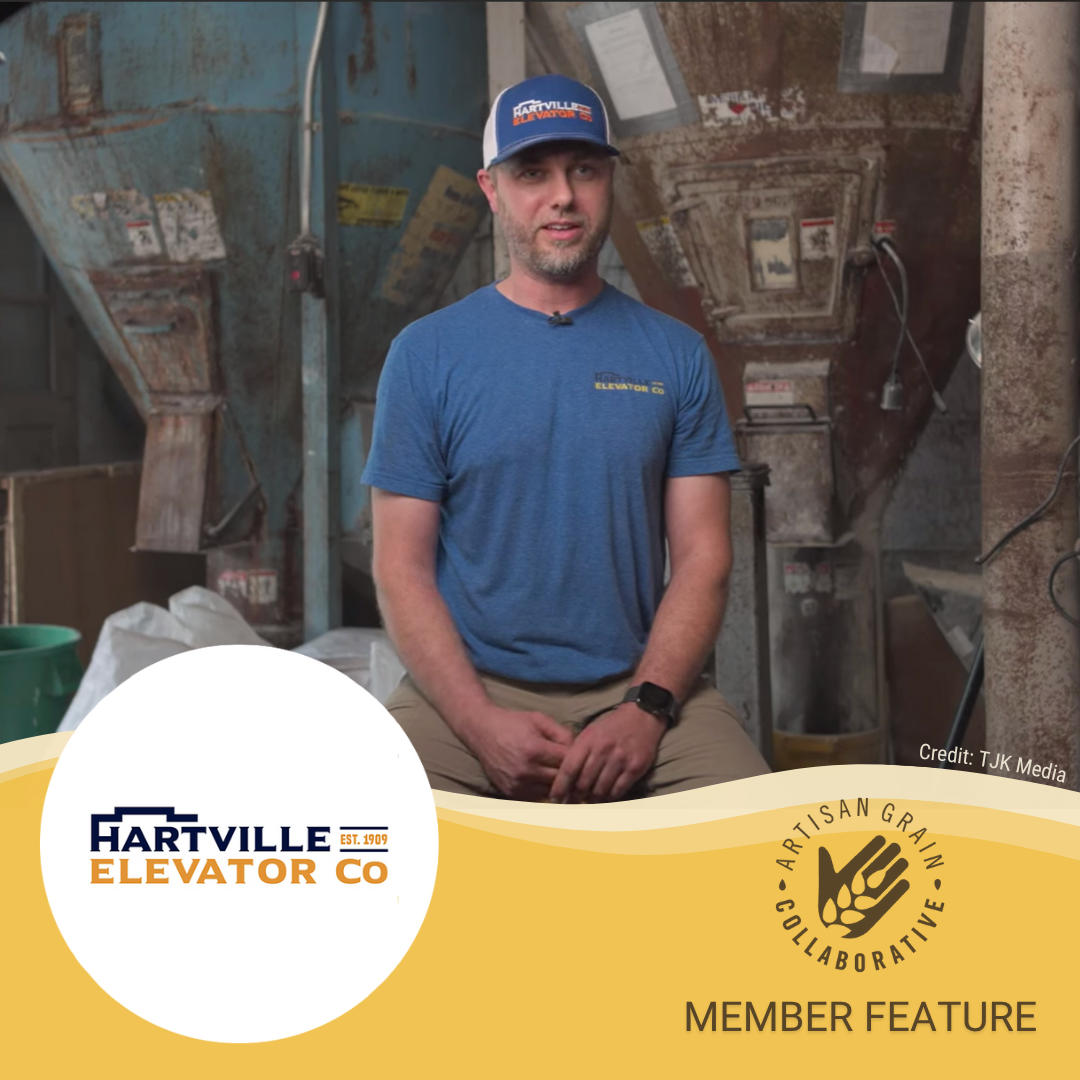
Hartville Elevator Company is a small feed mill in Northeastern Ohio that opened in 1909.
Small feed mills served farms of a particular scale, and not many remain. As farms got larger, feed mills had to grow or close. Until the 1970s, this elevator functioned largely as it had, handling grains for farmers, and acting as an aggregator for larger buyers. Hartville milled feed, and distributed other grains, mostly wheat for flour mills for surrounding farmers. Previous owners added home heating oil delivery to operations in the 1950s, a move that kept the business relevant as milling became just one of the things they did.
Now, Hartville Elevator offers lawn, garden and pet supplies, road salt, and petroleum delivery. Christian Ramsburg bought the elevator in 2023 and has already begun to act on his plans to adapt the business further. Small grains are a big part of those plans.
“I like to think of us as a craft mill. We do not try to compete in the bulk feed business,” said Christian. Their capacity for holding and handling grains is limited by equipment, and ultimately, their footprint. They sit on a half-acre right in the center of town, and are an iconic enterprise, fixed in the community.
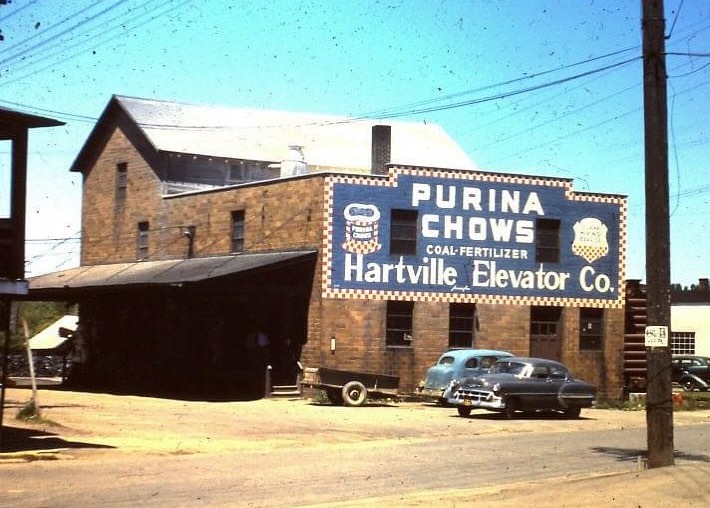
Customers choose to shop here over big box stores because of tradition and relationships. Christian sees the friendliness of the place as an asset. The relationships people have with the building and business are just as appealing, and some people have been shopping here their entire lives.
As a farmer, Christian was one of those people. He relied on—and still relies upon—the mill for feeding the livestock and poultry he and his mother raise for their grazing and grass-finished operation. He estimates he passed the Hartville Elevator 20,000 times before he ever thought of buying it. When the opportunity arose, he seized it.

“We are still the feed mill’s biggest customer, which is not ideal,” Christian said, laughing.
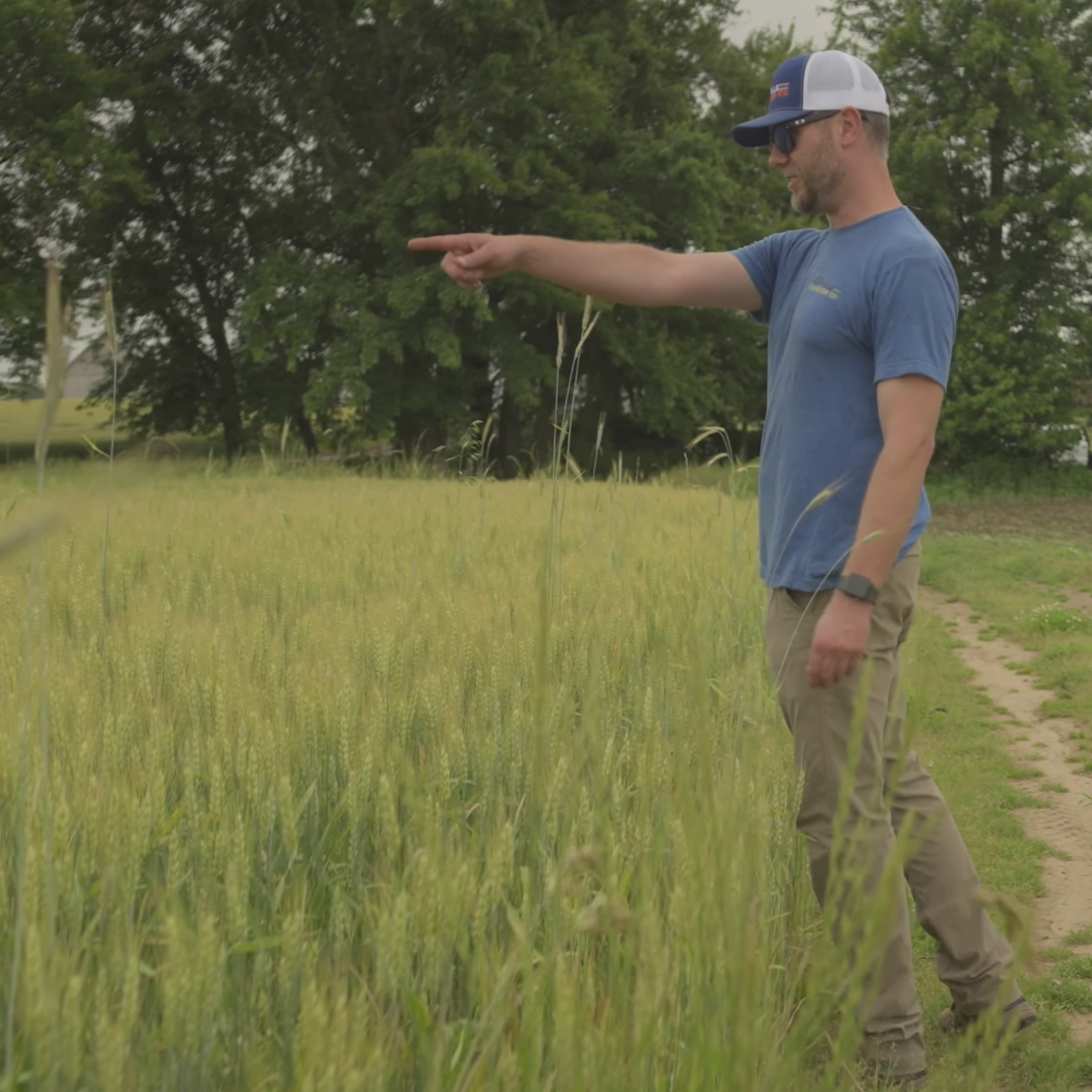
As a continuously operating feed mill, the mill is tied to surrounding farms, who provide grain, hay and straw. In 2019, Hartville began grinding corn for distilling for a nearby vineyard/distillery. In the time he’s been owner, Christian has increased the amount of local grains the distillery uses, up to 35 tons, including some rye and barley. That’s the direction he’d like to expand the business, and that means upgrading equipment.
With that perspective, Christian has recently been serving on the Advisory Team for a new AGC project focused on creating a resource for distillers on how and why to source local grain. His experience buying local grains to mill for distiller customers is helping to bridge understanding between farmer and distiller needs in the local grain value chain.
In 1960, the Hartville Elevator updated to what was then state-of-the-art cleaning and milling equipment. That improvement put storage bins on the roof to hold ingredients for feed, and installed the hammer mill and network of interior tanks and augers that Christian and the staff use to make livestock and poultry feed.
As is, milling is dusty and awkward. There’s no good flow for bagging, and no air filtration. Building a warehouse addition with new grain bins, a new grain elevator, and a revamped indoor setup to better clean, mill, mix, and bag is key to increasing production capacity. These changes will make the process more pleasant, which is key to making a decent workplace for the next life of the elevator Christian envisions.
In addition to Christian, there are five employees, two of them part-time. Workers staff and stock the retail store, unload semi-trucks, receive goods from local farmers, make feed and birdseed mixes, and deliver feed, diesel and heating oil.
Their best-selling item is birdseed. “This year we will sell about 250 tons, all out of our single location,” said Christian. They also make feed mixes for chicken, pigs, horses, and cattle. The corn comes from a few nearby farms. “We can only fit around 5,000 bushels of corn, so we do have to get it on a pretty regular basis.”
Local oats are used in the sweet feeds until supplies run out, and Ohio grown sunflowers for birdseed are seasonally available, too. Livestock feed ingredients are easy to source locally. When asked whether their local sourcing is what keeps folks coming, Christian said yes, partially, and convenience matters too.
“I think people do like coming here and it feels like it did 50, 60 years ago when farmers lined up outside waiting to drop their corn off and get it ground. That doesn't happen as much anymore, but we still support local agriculture,” Christian said, noting it is easier for farmers to just drive it a few miles to the elevator instead of driving 30 miles to the nearest grain terminal.
Preserving farming history in contemporary context is no cakewalk, but given the Hartville Elevator’s longevity, and Christian’s approach, prospects look good. Getting the building on the National Register of Historic Places is underway.
Hear directly from Christian, the former owners of Hartville Elevator, and others in this video:
Christian is part of AGC's Brewing and Distilling Working Group, and enjoys being a part of our broader network. We are glad to have his energy aboard!
